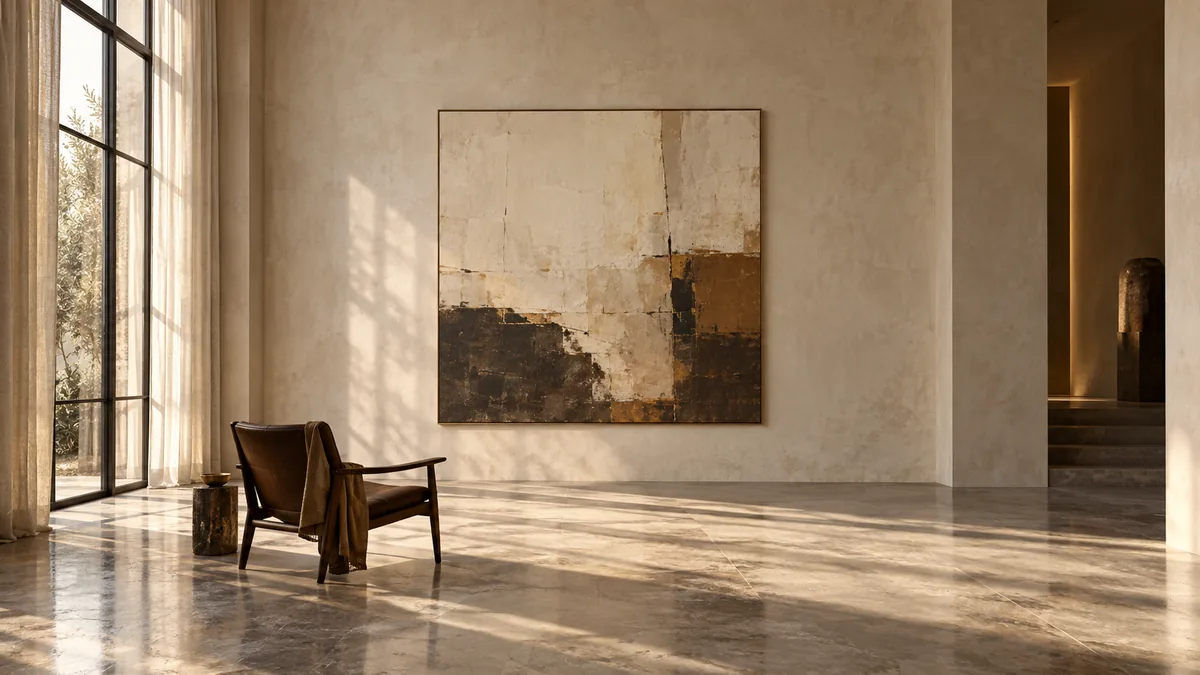
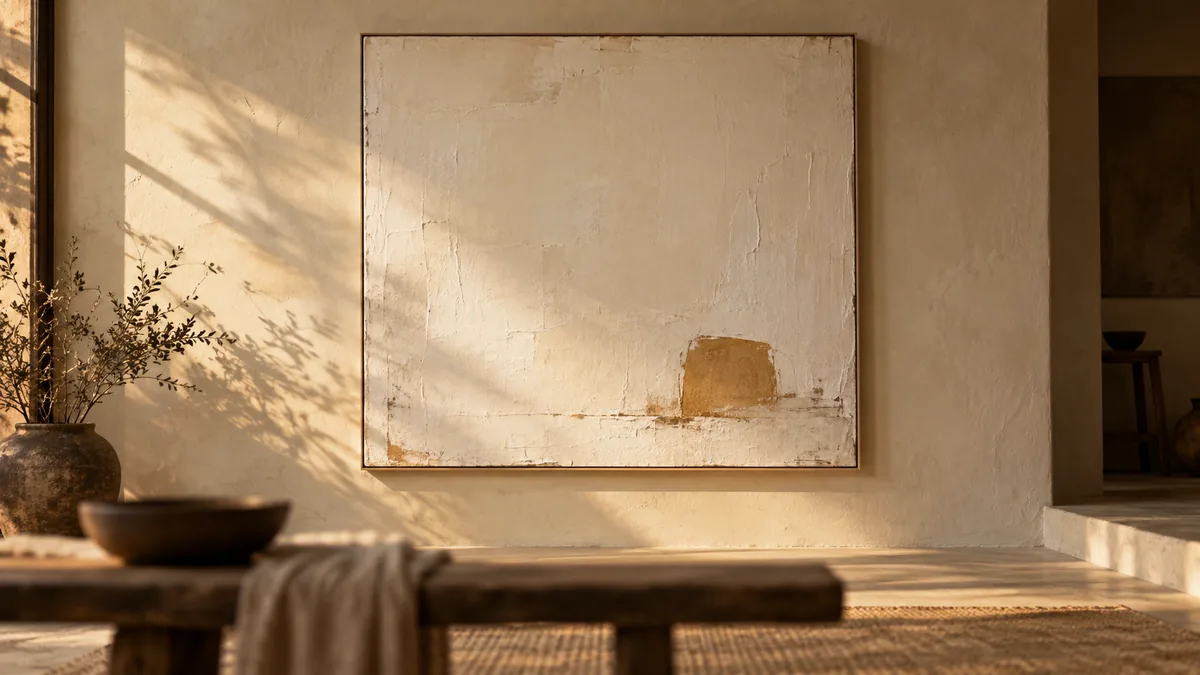
A type of quiet comes over a room when an artist lets a canvas "breathe" (as opposed to filling every inch). The quiet isn't the quiet of absence. It is the quiet of restraint; the artist has decided not to place anything on the surface. At West23, we repeatedly encounter this concept and continually come back to this as many of our viewers are moved by the painting due to what is NOT there.
Negative space is often presented to students as a technique used to balance a composition in order to keep the viewer's eyes from tiring. While this is accurate, it is merely the tip of the iceberg. If artists utilize negative space purposefully it creates a type of language. This language informs the viewer where to put their gaze, where to meander and where to feel a sense of tension or resolution. There is a significant amount of artistic intent behind allowing portions of the canvas to remain vacant. An artist utilizing negative space as such is creating the same level of intent in creating silence as they would create forms.
Consider how much emotion a subject could elicit if placed slightly off-center and encircled by an expansive area of subdued tones, compared to a subject located in the center of a dense canvas. The vast empty area surrounding the subject is not neutral. Rather, it is pressuring inward upon the viewer. It encourages the viewer to slow down their gaze, contemplate proportions and to appreciate either the isolation or serenity that was intended by the artist. This is a paradoxical nature of negative space: it is typically the least manipulated portion of a painting yet it is usually responsible for performing the greatest amount of labor.
When considering Georgia O'Keeffe's flower canvases, with the blooms magnified to architectural levels and their respective negative spaces being nearly as charged with energy as the blooms themselves, or Rothko's expanses of color that are essentially a void, there is no real distinction between positive and negative space. Rather, each is utilized as a medium of expression. Each invites the viewer to apply their personal emotional context to the space. Similarly, in traditional Indian miniatures, the unplastered areas surrounding the subjects have devotional value. Potential is never lacking in these contexts; there is always something present.
Music provides an analogy. A resting note between other notes is not simply silent. Rather, it serves as a structural element. The prior note(s) gain resonance while the subsequent note gains strength. Artists employing negative space achieve something similar with the viewer's gaze. As musicians recognize dynamic range and know when to restrain themselves so that subsequent gestures (the impasto strokes, flashes of color)land with greater weight, artists using negative space similarly recognize tonal register and understand when to withhold themselves so that subsequent marks have greater impact.
While walking collectors through the rooms at West23, we commonly stop longer at canvases with more intentional use of negative space rather than those with greater detail. Confidence in an artist's ability to allow empty space to evoke feelings stems from maturity as an artist and ultimately from trust in both materials and the viewer. Early in an artist's career, the tendency is to fill (to demonstrate skills through density of mark making). Only after gaining confidence in composition does an artist learn to leave some parts of the canvas alone. Negative space then becomes more than just a technical tool; it represents an artist's trust.
Philosopher Merleau-Ponty explores related ideas regarding perception. He proposes that people perceive objects based on some form of embodied interaction with their environment. Figures and backgrounds exist along a continuum; thus, the negative space surrounding figures on a canvas is not strictly speaking background but rather contributes to how the eye interprets content. The empty space is engaged in perceptual activity and not mere ornamentation.
Walter Benjamin discusses the "aura" of an original work of art. He posits that reproductions (regardless of accuracy), tend to eliminate the subtleties that provide an original piece with its "presence." Negative space is one example of those subtle elements lost in reproduction. A photograph of a painting collapses the perceived gap between mark and emptiness into a homogeneous plane. Seeing an original piece allows for registration of depth, texture and physical dimensions of empty space that images cannot convey. This is one reason we consistently encourage collectors to view works before purchasing. The perception of negative space varies by proximity, and that sensory aspect cannot be transmitted through screens.
For collectors establishing collections, we recommend examining how paintings handle their quiet sections, not solely their dramatic moments. Canvases that are comfortable trusting in restraint may indicate more maturity in their creator and more respect for their viewer's own perception. Additionally, paintings that rely heavily on mass and incident can quickly lose their visual appeal after repeated exposure over several years in a residence. Conversely, paintings that provide room for breathing continue to gradually reveal themselves.
Beyond painting, there exists another modest lesson. With today's overwhelming volume of stimuli, a canvas that confidently employs silence feels almost revolutionary. It requests that the viewer decelerate his/her viewing speed, observe movement within their gaze and reflect upon unresolved sections rather than demanding resolution.
Ultimately, this describes what exceptional artworks do: they do not merely illustrate concepts; they alter the rate at which viewers see concepts.
At West23, we regard negative space not as an absence waiting to be filled, but as an associate to form; an associate that influences how long after an initial look an artwork remains engaging. Ultimately, perhaps it is the most benevolent action an artist can take towards someone standing before her/his artwork: providing them with sufficient room to think.
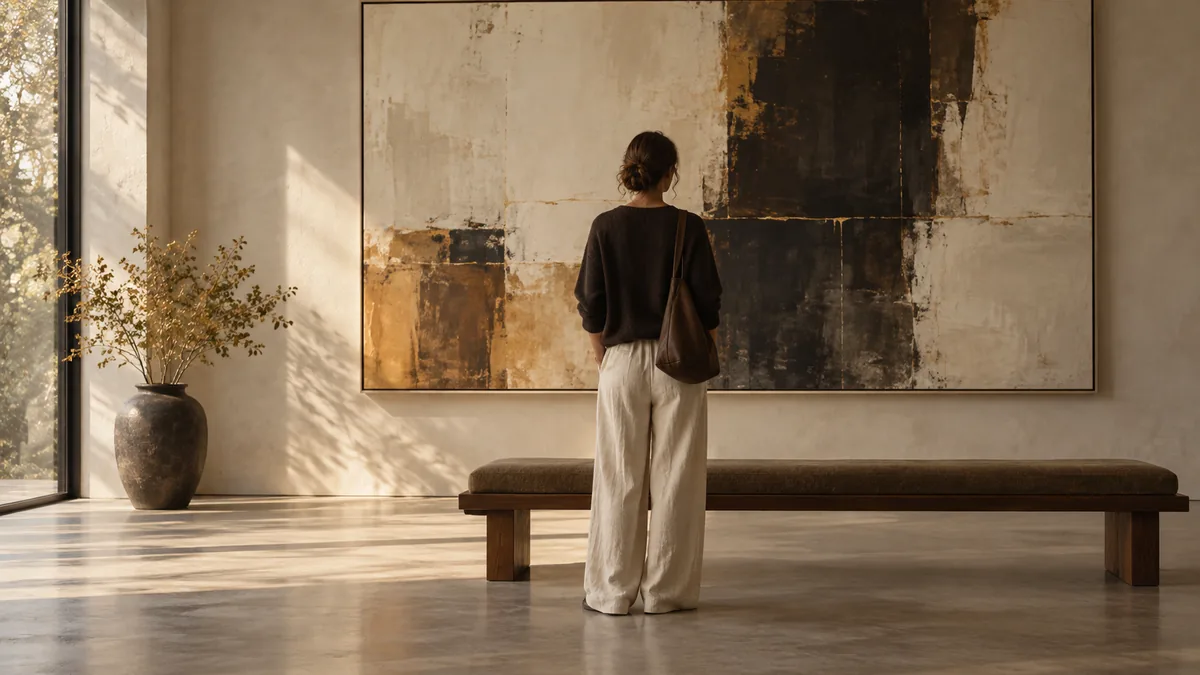
Additionally, I'd like to briefly discuss another point concerning scale. Depending upon size, negative space conveys different effects. In smaller canvases, expanse without mark-making can appear almost intimate, as if the artist has shared only a fraction of their thoughts with you. On larger canvases, similar actions can result in experiences akin to Rothko's chapel-scale pieces where the substantial size of the empty field demands participation from your entire body (not simply your eyes).
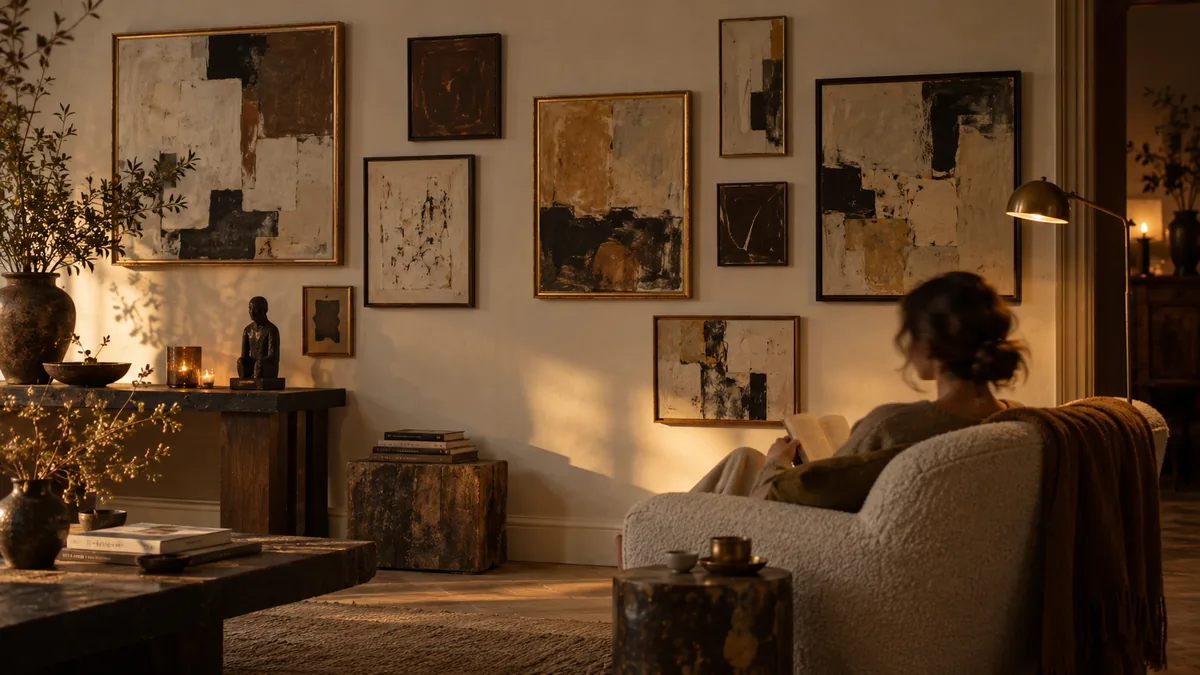
Upon advising clients on placement within their homes or on gallery walls we pay great consideration to how much negative space a given painting requires immediately surrounding it for maximum impact of its internal quiet passages. If hung too close to neighboring pieces, a canvas with considerable empty passages loses much of its quietude due to adjacent visual distractions. Given ample space away from others it regains its overall aesthetic.
I should also clarify that negative space is NOT identical with incomplete/unfinished artwork although some new collectors confuse these terms. An unfinished piece contains ambiguity in its blank passages - indicating uncertainty whether the artist simply stopped working. A piece composed intentionally through empty passages indicates confidence in those empty places, suggesting the artist made an informed choice to terminate operations there & nowhere else. The distinction is rarely evident initially, but emerges with familiarity.
Ultimately, negative space requests something from both the artist and viewer in today's maximally declarative culture that frequently goes unnoticed. Negative space requests artists trust that restraint will be interpreted as deliberateness rather than vacuity; and negative space requests viewers sufficiently slow their viewing pace so as to detect what has remained unspoken. When both parties act accordingly, the painting becomes a conversational experience, unfolding slightly differently each time viewed.
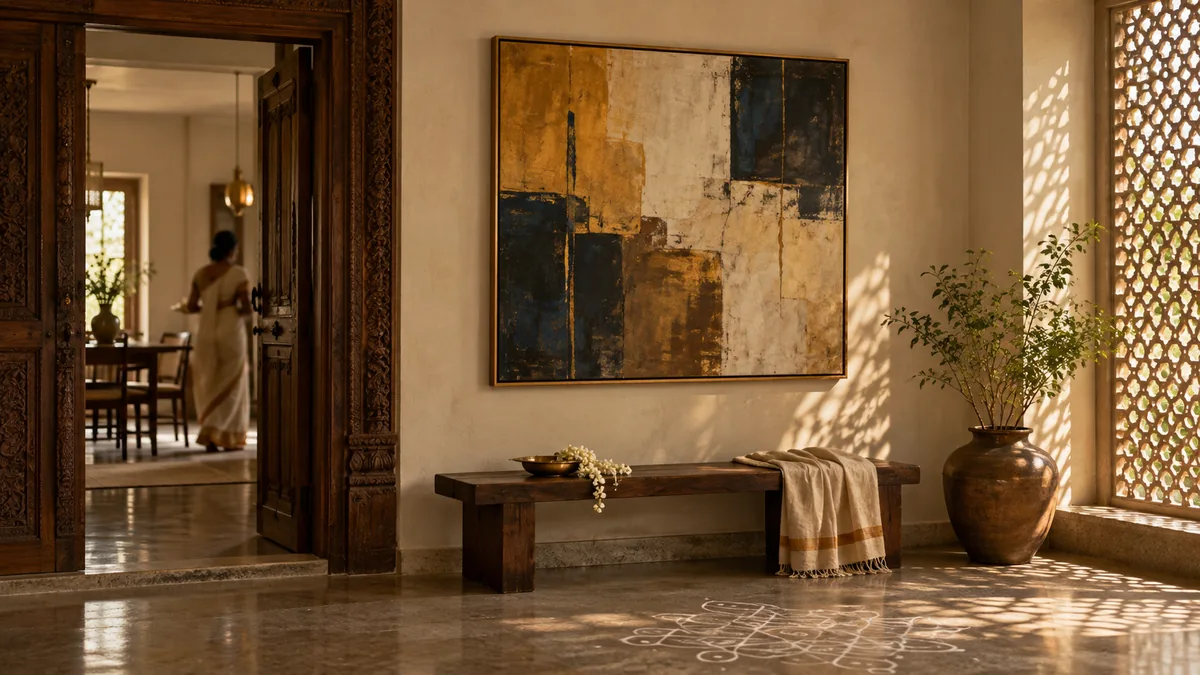
This relationship transcends considerations for how an artwork functions within a room. Paintings employing large amounts of negative space exhibit malleability relative to location within a house or office building. Upon installation against lighter-toned walls, negative space within paintings appears to spread outward, blurring boundaries between frame & canvas. Installed against dark-colored or textured surfaces, the same empty space appears contained, even somewhat restricted. One of my favorite aspects of collaborating with architects & interior designers involves observing how decisions regarding colors for surrounding walls significantly affect emotional registrations resulting from paintings that derive impact from negative space.
Lastly, there exists an additional philosophical layer worthy of contemplation. The notion that absence can contain presence is not unique to painting. Presence via absence occurs throughout classical Indian aesthetics as evidenced through Rasa, the essence or flavor of a work often resulting from what has been depicted versus what has been omitted, and subsequently realized by the observer. The viewer is not passive; he/she participates by contributing associations into areas previously unmarked by depiction. A painting employing substantial amounts of negative space presents a challenge in this manner; it presents itself as an invitation rather than a pronouncement, presenting neither conclusion nor solution; it relies instead on trust in viewers to develop solutions.