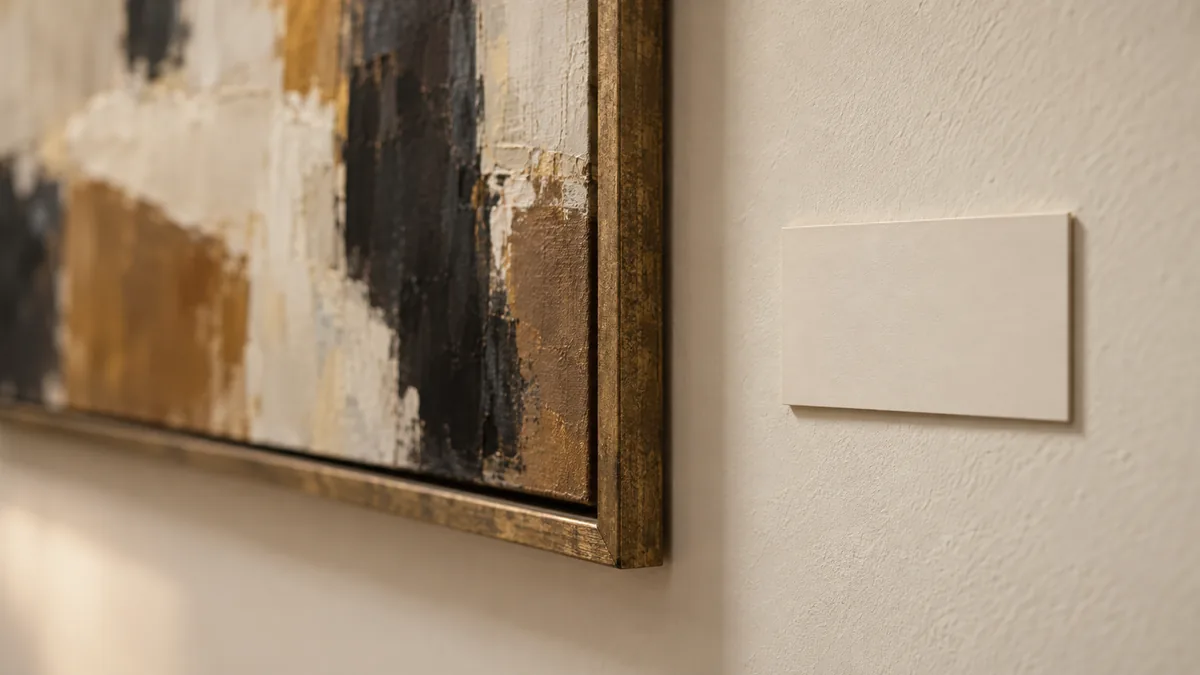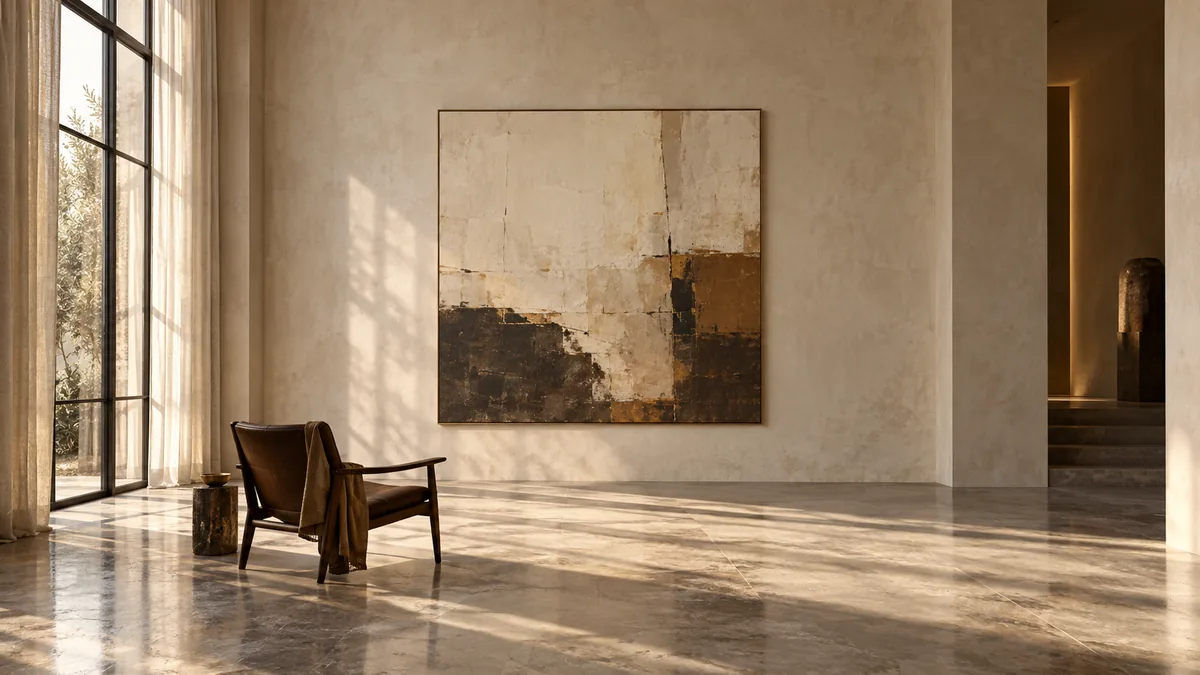
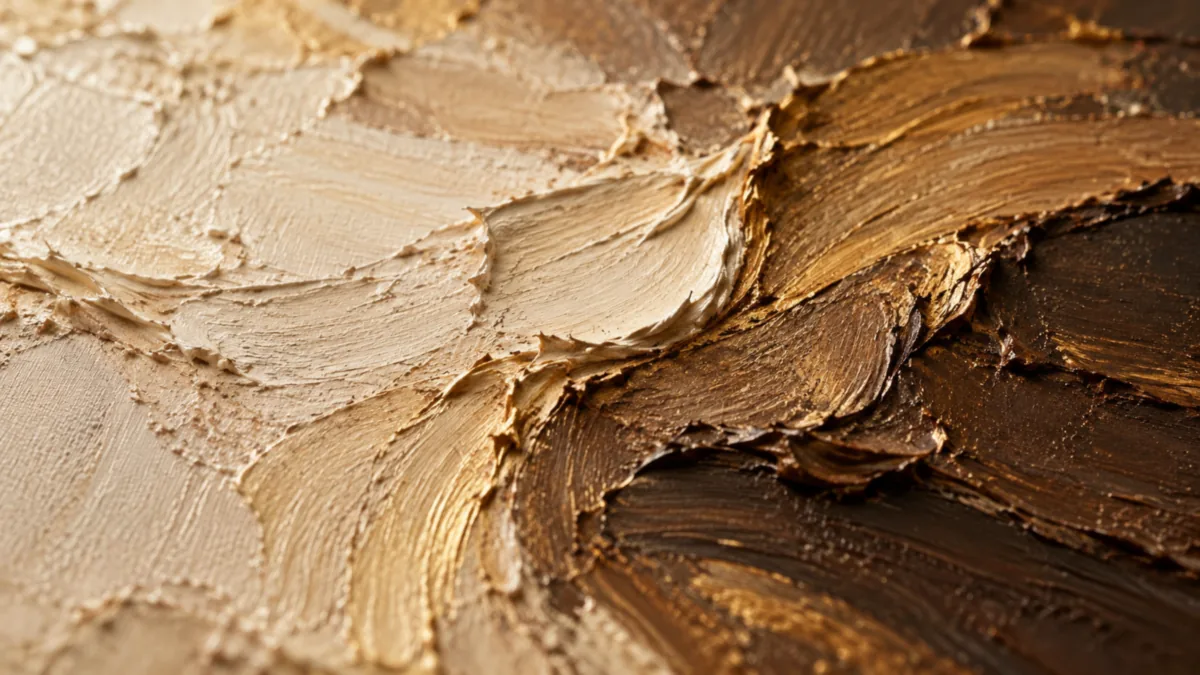
At times while standing before certain artworks, a point will be reached when the eye ceases to ask what is represented and instead asks almost automatically, how did it get that way? This is generally true when the surface of the artwork displays obvious signs of thickness (impasto) and when the paint remains thick enough to show the tracks of the artist’s tools (brushes and knives). While planning composition or subjects, artists have ample opportunity to make changes and revisions; however, gesture, the actual physical movement of the artist’s hand captured forever in paint, occurs in real-time.
The movement of the artist’s hand, including speed, pressure, hesitation and/or confidence are all captured and recorded. In addition to recording the movement of the artist’s hand, thick impasto strokes capture the path of that movement, the amount of pressure used and occasionally even the timing of when the artist realized that the stroke was running low on paint and would begin to thin towards its conclusion. When viewing an impasto stroke up close, a viewer is essentially witnessing a physical record of an actual event, much like a footprint, as opposed to a photographic image of a representation.
We believe this is an important distinction in order to understand why many paintings appear to convey vastly different feelings when viewed in person versus reproduced. For example, a photograph of an impasto passage collapses all three-dimensional data of the paint application into a two-dimensional plane. Shadows cast by the raised surfaces that provide depth to an impasto passage will create shadows under museum lighting conditions. However, these same raised surfaces collapse into varying degrees of color in a photograph and therefore lose all physical attributes. One of the clearest illustrations of what is lost when a painting is experienced solely through reproductions versus experiencing it firsthand is Walter Benjamin’s discussion of the “aura” of the original piece. Benjamin illustrates that a reproduction, no matter how accurately rendered, cannot replicate the physical essence of an original piece. Additionally, we believe that gesture more than virtually any other aspect of painting relies upon this embodiment to be truly appreciated.
Another factor worthy of consideration regarding what gesture indicates an artist’s emotional/psychological state at the moment they created their work. Confident strokes generated through a single decisive motion carry an entirely different feeling than tentative, hesitant strokes developed through multiple layers and adjustments. Neither type of stroke should be considered inferior. Many highly influential gestures in art history combine aspects of both types. For example, sections of confident, gestural brushstrokes placed alongside sections requiring careful layering are common. Ultimately, whether a gesture is earned or performed is dependent upon whether or not it arose from genuine engagement with the unique requirements of that specific section or if it was employed as a signature mannerism regardless of context.
When reviewing emerging artists’ works, we frequently assess whether their gestures seem "earned" or "performed." Artists can develop techniques to create bold, expressive brushwork through repetition and practice; therefore, creating dramatic brushwork can occur regardless of technical ability. What separates genuine gestural painters from those attempting to mimic them lies in a painter’s ability to demonstrate sensitivity to the specific requirements of each section in their compositions. A painter demonstrating true mastery over gesture demonstrates an ability to vary their brushstrokes significantly throughout a composition. They move freely between passages that require restraint and passages that require visible energy based upon the requirements presented by the composition itself. Conversely, less skilled gestural painters employ a consistent level of expression across their compositions.
We wish to further illustrate how gesture relates to both the physicality of the painter as well as the physicality of the viewer. Viewers often experience physical sympathies when standing before canvases displaying large-scale gestural brushstrokes. These sympathies arise from an intuitive awareness of the size and energy behind the movements that produced those gestures. Scale plays an enormous role in gestural painting. A small reproduction of a larger gestural canvas sacrifices not only detail but also this entire dimension of physical sympathetic resonance due to the absence of viewer positioning relative to gestures that were originally produced using movements of either the painter’s full arm or even their complete body; whereas smaller gestures are produced using limited wrist motions.
As Merleau-Ponty discussed in his writings on embodied perception, understanding another individual’s intended action (for example reaching for an object), involves not merely cognitively deducing intent from observable behavior. Rather, one feels this process occurring through an empathetic connection with one’s own bodily capacity for recognizing and nearly replicating similar actions. If we apply this idea to painting, then our response to gestures in a given composition represents more than mere visual analysis; rather, it is closer to physically recognizing gestures that resonate with one’s own bodily memory of performing similar gestures. Perhaps this explains why gestural painting can elicit strong visceral responses from viewers who possess no formal education in reading color theory or compositional structure. Viewers respond to gestures physically independent of their trained analytical eyes.
Finally, we think about how gestures differ in aging characteristics compared to other artistic elements. Compositional structures and color relationships remain relatively consistent in terms of perceived organization over extended periods of time spent living with a particular artwork. However, due to its embodied nature (i.e., it retains a performance-quality), gestural brushstrokes can remain vividly alive for decades after first exposure to a heavily gestural composition. Collectors who have lived with gestural paintings for extensive periods report continuing to notice gestures they hadn’t noticed before. The physical record of the artist’s hand appears to offer collectors new insights based on prolonged observation. We believe this provides one of the quiet rewards for acquiring gesturally ambitious artworks, providing collectors with continued opportunities to discover new elements in the artworks they live with over time.
During discussions with collectors concerning a painting’s surface, at West23, we encourage collectors not only to focus on what has been depicted but how the paint was moved onto the canvas as well. Due to widespread reliance on digital platforms for consuming images, collectors often overlook the physical dimensions associated with an artwork’s surface. The physical nature of an artwork’s surface contains meaning separate from that conveyed by an artwork’s depiction. The physical presence inherent in gesture is among the few ways an artwork can engage a viewer physically, much like shaking hands with another person across time. An artist’s physical movements as evidenced by the brushstrokes are preserved and retain legibility; thus allowing a viewer to reciprocate physically when standing quietly before the canvas.
In addition to highlighting the importance of considering gesture as an element present in paintings collected by individuals at West23, we would note that gestural paintings teach collectors about their own attention in ways that more sedate, contained works rarely do. Due to their high degree of surface variability, gestural paintings resist ever being completely cataloged during a single viewing session. Observers commonly comment that they observe something different each time they walk past a gestural painting and that a gesture previously invisible becomes apparent when illuminated at a particular angle during daylight hours. This phenomenon is not indicative of the painting changing; rather it reflects collectors developing renewed interest in re-establishing their relationship with a surface that never reaches a fixed status relative to interpretation. As noted earlier, there are very few aspects related to paintings that can foster sustained daily involvement with a collection as consistently as this characteristic does.