While we usually wonder what a painting owes us, whether it inspires us, justifies the time we dedicate to it, or if it is worthy of acquisition, we don’t usually think about what we owe to a painting. While these are valid questions and we’ve addressed many of them in previous essays, there is another, more subtle question that is inversely related and merits some exploration. What obligations do I have to honor the labor, the history, and the intentions behind a work when I look at it?
It’s possible you’re thinking this is an odd way to describe your experience looking at a painting; more applicable to an ethical discussion than an aesthetic one. However, we think they're less separate than initially thought. Each time we look at a work of art, we enter into a type of relationship, no matter how temporary, between a viewer and the collective intent contained within the layers of a painted surface. Since relationships (no matter how short-lived) entail some degree of responsibility, we are not referring to a type of obligation based on morality, but rather to a form of attentiveness. Attentiveness refers to the ability to recognize what has truly been presented rather than merely relying on assumptions based on a hasty glance.
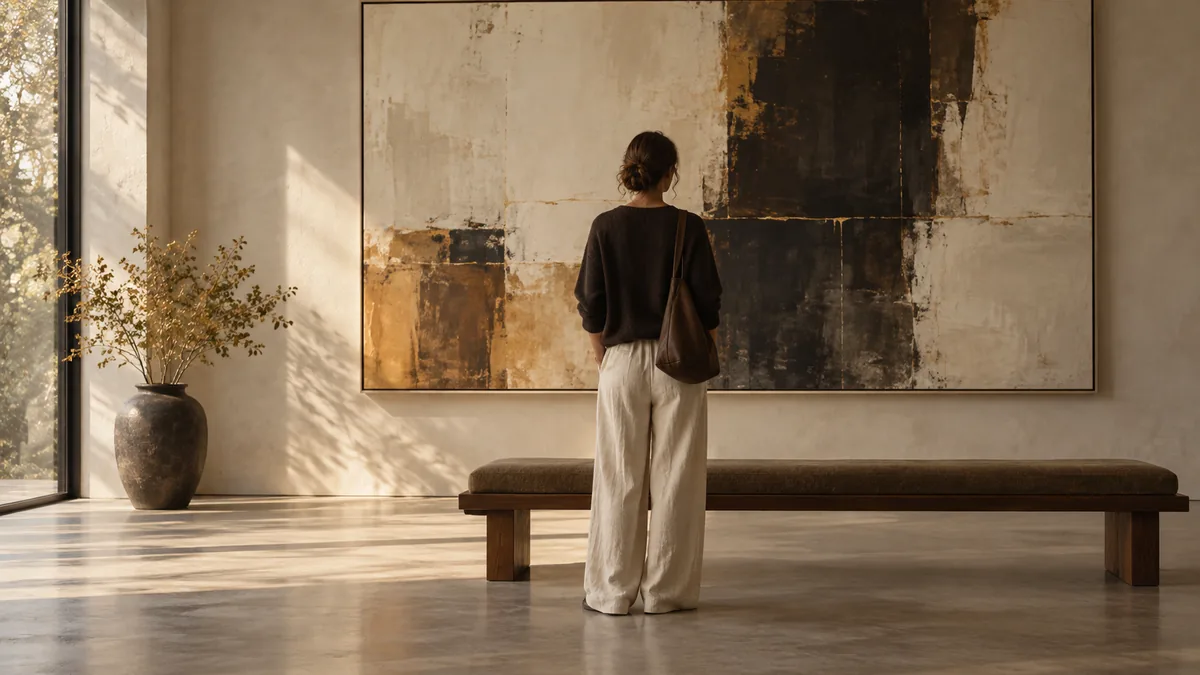
For example, consider the difference between a viewer walking quickly past a painting and recognizing only its general theme and color before continuing to the next piece of artwork, versus a viewer stopping briefly to study the composition of the painting, noticing where paint has been applied thickly and thinly, and paying attention to how the lighting in the room falls upon the surface at that exact moment. Although both viewers have technically viewed the painting, only the second viewer has really taken a good look. The difference between "looking" and "seeing" seems fundamental to understanding what we refer to as the ethics of looking. Typically, a painting is the result of an extended period of intentional effort on behalf of the artist, involving deliberations and reconsiderations resulting in layers of paint build-up and scrape-back. In addition, each layer contains an entire history of care and attention. A viewer glancing quickly at the painting without making note of any of these details is not inherently a moral lapse. However, viewing a painting as a normal course of action without slowing down long enough to make note of them results in a genuine loss for both the viewer and the painter.
In terms of similarity to how we might consider listening to someone talking about something important to them, there is a similar analogy. A polite yet distracted listener who nods along while attending to something else instead of focusing their complete attention on the speaker hearing the actual words will fail to receive what is intended to be communicated. We easily recognize this failure in conversational interactions and typically accept it as a minor infringement against respect due to the speaker. For reasons unknown, we tend to apply the same standards for respect to our interaction with painting less than we do with people. Nonetheless, the labor represented in the creation of the painting exists regardless of whether or not the viewer recognizes that labor with proper attention and focus. Something is lost when that labor consistently receives little to no recognition.
The existence of this idea provides practical guidelines regarding how best to approach a visit to a gallery or exhibit as well as how those visits should be conducted beyond mere courtesy. First and foremost, in order to provide for genuine looking at a painting, a viewer must agree to slow their pace significantly compared to what would feel comfortable in a culture that has grown accustomed to consuming images rapidly via screen-based media and social feeds. As noted previously, few images contain enough information about their content or style for a viewer to appreciate fully in approximately three seconds. Rather, viewing a painting's full range of characteristics requires prolonged periods of sustained attention. Considering this fact, combined with the reality that few viewing practices developed from contemporary digital exposure patterns provide adequate preparation for viewing habits based on extended periods of sustained attention, it appears that genuine looking at a painting will require an active decision-making process that seeks to intentionally develop a disciplined habit of resisting the speed at which viewers' prior visual experiences have conditioned their behavior.
Additionally, we recommend that genuine looking at a painting include humility. Humility entails viewing paintings with openness and willingness to linger in confusion or uncertainty rather than rushing immediately to assign either positive or negative judgments toward them. Many paintings elicit neither instant enthusiasm nor dismissive distaste. A viewer who rushes to categorize quickly risks closing off the opportunity for that painting to gradually show what it offers during the longer period required for difficulty or unfamiliarity. As noted previously, this same patience is required for developing a personal satisfaction with collecting artworks. Patience during the viewing process is also essential for showing respect for painters' labors.
Finally, we argue that an additional aspect of the ethics of looking includes considering context. Consideration of context refers to respecting the traditions and histories behind which a painting emerged rather than only viewing it through your own current cultural lenses. For example, a painting using classic Indian principles of aesthetics or referencing a specific regional devotional tradition should be viewed by a viewer interested in learning about that context as opposed to reducing the work solely through your own cultural references. It does not imply that every viewer must become an expert in every possible tradition referenced by a painting; rather, it implies that when confronted with unfamiliar contexts, curiosity should replace indifference and acknowledge that paintings' meanings are often dependent upon histories that require effort on behalf of the viewer to locate as opposed to assuming familiarity.
Lastly, we propose another element we term "the ethics of return," which includes practicing multiple views of paintings over time. Practicing viewing paintings multiple times is easier when you live with paintings and can view them daily at home. However, it is more challenging but not impossible in galleries/museums where you can only see individual pieces during a single visit. Even within a single visit, viewing paintings again after leaving them and then returning to view them after viewing other works often reveals aspects or qualities present in the first pass that were completely overlooked. We would encourage practicing this aspect whenever feasible as a method of honoring painters' labors as well as providing the sustained attention such labors deserve.
As we take collectors through our rooms at West23, we attempt to encourage this more deliberate and attentive mode of looking as much as possible (where relevant), rather than encouraging quicker, more transactional walkthroughs focused primarily on availability and cost. Regardless of whether or not an individual acquires a painting, we believe each painting deserves this level of attention simply because of the labor and intention behind its creation. Ultimately, what we owe a painting is not necessarily an obligation in any traditional sense, but rather an attentiveness, specifically a willingness to be physically present in front of it attentively and without rush for however long you remain.
To conclude our thoughts regarding an ethics of looking practiced seriously, we find that such attentiveness often carries over into individuals' behaviors outside of how they interact visually with art. Individuals who have learned to slow their pace when interacting with paintings often report finding this same patience is available in other areas of their visual lives including landscapes, buildings' proportions and sitting silently until moved emotionally by new music heard for the first time. Thus, viewing paintings as described above is transformed from simply a specialized leisure pursuit into a relatively quiet discipline of presence, one that gradually shapes how an individual encounters items that demand sustained attention.
Ultimately, we believe this is one of the more generous gifts provided by serious looking, extending far beyond the walls of a gallery into the overall fabric of an engaged life.