A painting is not self-contained; it is positioned in a space that dictates how light falls upon it, how a person views it, and how much distance the eye needs to travel until it reaches the painting. We are frequently asked by newer collectors to galleries if we devote so much attention to the space around a piece of art (i.e. the gallery) versus the piece of art alone. The simple response is that the meaning of a painting is never completely separate from the space that contains it. If you change the room, you essentially change the painting.
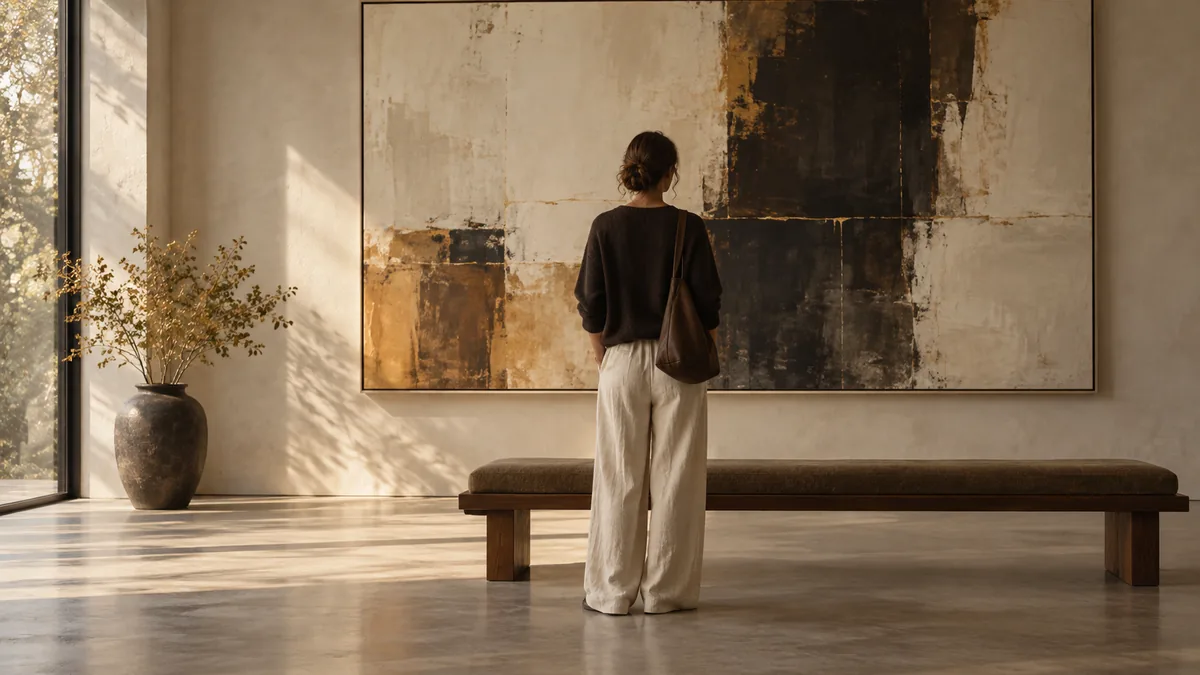
This is best illustrated by examples of contrasts. Consider taking one canvas and placing it in two different settings. First, place it in a small, low-ceilinged room. Hang it near eye-level with little space surrounding it. Next, take the same canvas and hang it in a spacious, high-ceilinged gallery hall. Leave ample space to both sides. The painting has not been altered in any respect; no single brush stroke has changed. However, the experience of viewing the same canvas would differ greatly between the two spaces. When viewed in the small room, the painting appears to be "close" and even somewhat "confidential," as if being viewed at conversation length. When viewed in the expansive hall, the same painting appears more like a declaration of intent and as such requires a greater distance to view before approaching the details of the painting. While neither experience may be more or less valid than the other, they are certainly distinct ways of experiencing the same object. That distinction is solely due to the manner in which the architecture defines these differences.
Another aspect of architecture that influences scale is ceiling height. Tall ceilings generally create an environment in which even large canvases appear to be a part of an intentional whole rather than overwhelming the space. Conversely, a low ceiling can cause a moderate-sized painting to appear disproportionately bold simply because it fills a greater portion of the vertical plane within the viewer's line-of-sight.
In recommending placements for artworks, one of the first factors we consider is not simply where an artwork looks good independently, but how the proportional dimensions of the specific room influence the perceived size of an artwork once it is installed.
Natural Light
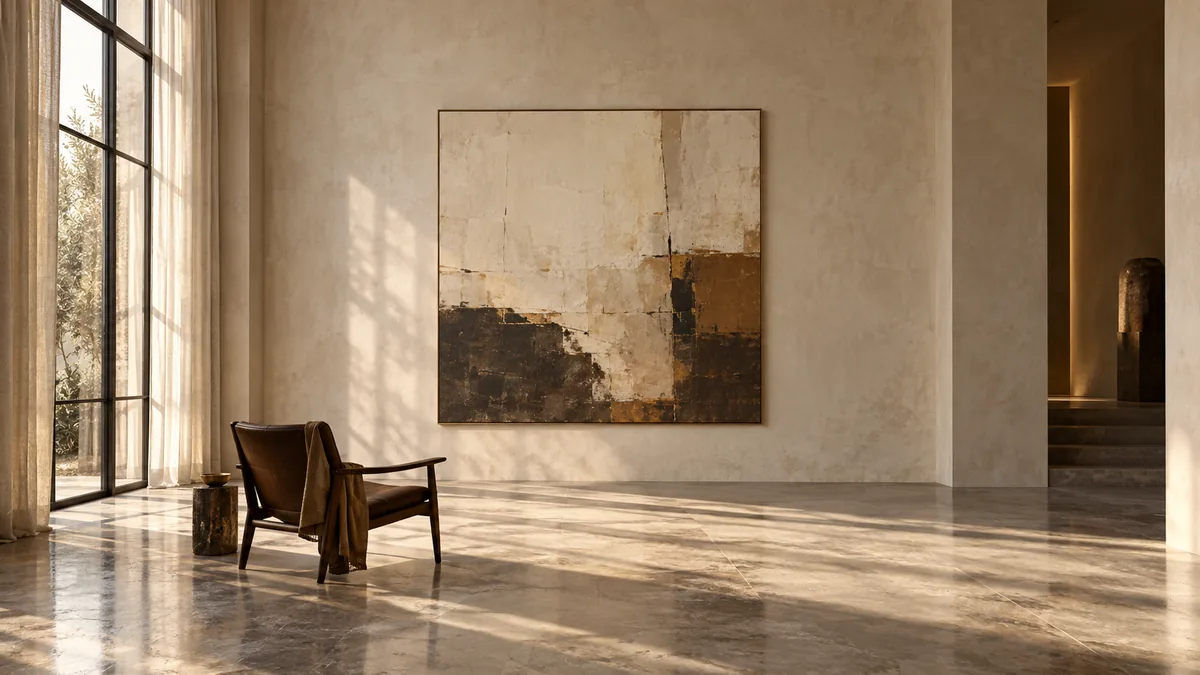
Natural Light affects perception significantly. A room with abundant north-facing indirect light provides a relatively constant viewing condition throughout a day, permitting color and tone relationships within a painting to remain consistent from morning to night. A room with bright sunlight from an eastern or western direction provides dramatically varying and unpredictable viewing conditions, with paintings appearing overly lightened during peak sun periods and richer in tones during shaded periods. Works may be intended to respond dynamically to changes in natural light (their surface designed to provide a varied appearance depending on whether it is viewed at sunrise, noon or sunset), while works intended to display subtle tonal transitions are better suited to viewing under consistently diffused light.
Walls
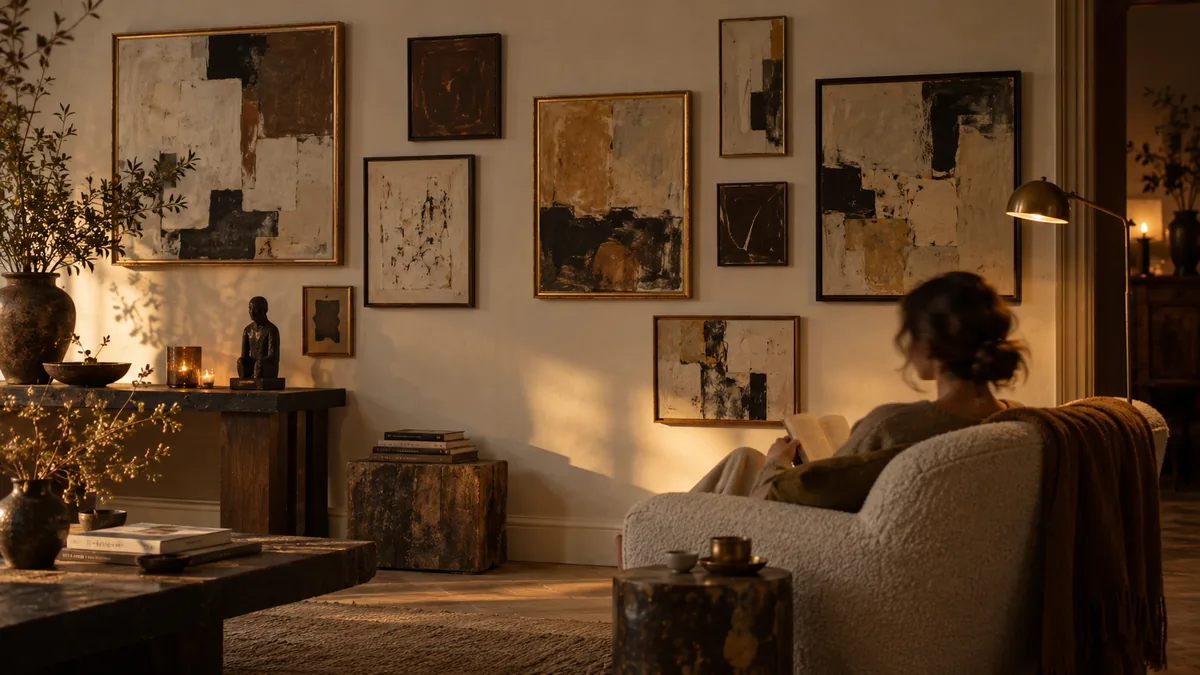
We often discuss how a wall serves as a type of framing element within a broader composition of a room. A minimalist gallery wall containing a single major work, surrounded by empty wall space, presents a fundamentally different rhythmic pattern compared to a salon-style arrangement featuring multiple works grouped closely together creating a more densely composed overall visual field. Both modes have historical precedent. Salon-style arrangements were used exclusively in European galleries during the Nineteenth Century, creating an abundance of visual stimuli encouraging viewers to continue moving visually throughout a crowded area. Minimalist gallery displays, popularized during Twentieth Century gallery exhibitions, ask viewers to dedicate their undivided attention to a solitary work at a time. The decision regarding which method to employ depends on several variables including: characteristics of the room itself; types of works presented; and the type of engagement desired by the collector.
Movement Through the Room
Just as walls define space and thus impact how an artwork is perceived, circulation or movement through a space also plays a key role. An artist whose work is located at the end of a long visual axis (and therefore visible from afar prior to the viewer reaching it) builds anticipation in a way an artist whose work is viewed without warning around a corner cannot match. Curators and architects use this understanding to stage not only individual works, but also sequences and rhythms of viewing, so that the architecture itself acts as a sort of narrative device providing emotional momentum leading up to the moment when the viewer finally faces the artwork.
Philosophical Dimension
Merleau-Ponty's writings on embodied perception remind us that we do not perceive space as an abstract neutral container. Rather we experience it through movement and through the body passing through a room and registering changing angles and distances as it travels towards an object. Therefore, a painting is not simply seen; it is approached, and that approach—dictated entirely by architecture, is part of how we perceive an artwork. For this reason photographs of paintings, no matter how accurately they reproduce color and detail, are unable to fully replace seeing an original artwork in its own room. Photographs flatten not only the surface of a painting but also all of the embodied elements associated with physically traveling to arrive at an artwork.
Architecture and Time
Finally, we recognize how architecture impacts a painting's relationship with time. Paintings viewed in rooms receiving changing natural light throughout the day appear many times per visit and their visual representation changes slightly based on changing levels of light. Paintings displayed under steady artificial lighting remain relatively unchanged regardless of time of day. Collectors who appreciate discovering something different about a painting at different times of day often favor locations with changing levels of natural light, while those who seek consistent readings of their paintings regardless of hour favor steadier artificial lighting conditions.
Additional Variables
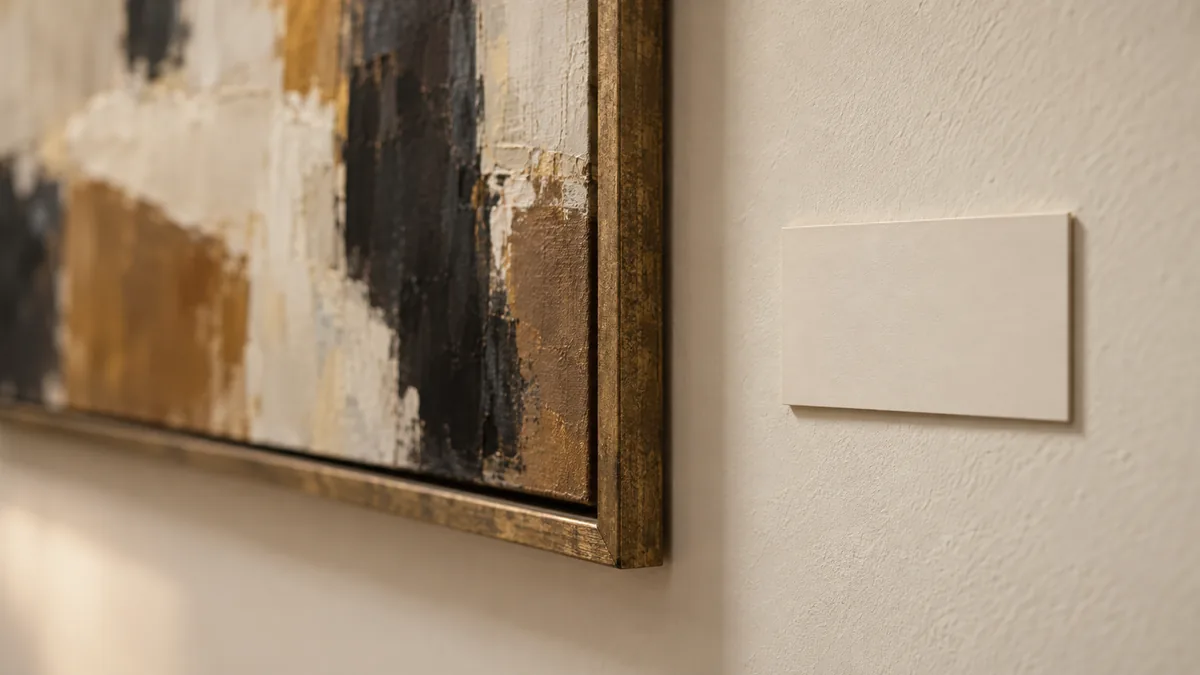
While there are numerous additional architectural considerations affecting perception, materiality and texture in the architecture itself act as more muted influences than might initially be expected. A single canvas hanging on a smooth matte-plastered wall exhibits visual characteristics distinctly different from when hung adjacent to exposed brick or highly-textured surfaces. The presence or absence of visual interest from the walls' surfaces either fades into background and gives total dominance to the painted surface or gains attention for competing texture, distracting some attention from what lies on top of it. Over years of installation activities we have observed that artists using thin-controlled layers of paint typically prefer quiet-smooth walls where no other textures compete with their own subtlety. On the other hand artists employing thick complex layering techniques may still hold their own against more textured backgrounds because their own surface complexities demand attention regardless of what surrounds them.
Scale of Nearby Furniture Matters Too
Although rarely mentioned alongside issues related to scale concerning painting, scale of nearby furnishings impacts how a viewer perceives an artwork as well. A canvas hanging over a low minimalist console appears authoritative in comparison to an identical canvas hanging above an ornate cabinet filled with objects. The nearby furnishings establish some type of visual reference point against which the artwork is evaluated, and astute architects and interior designers will often reduce clutter immediately surrounding a major work specifically so as not to distract from attention that should rightfully be focused on that artwork.
At West23, when working with architects and interior designers on developing how a collection will interact within a space we attempt to conceptualize architectural components as participants influencing perceptions of paintings within that space. Paintings can exhibit significantly different interpretations based upon thoughtful placement within architectural design elements relative to similar interpretation within non-considered settings.