
Although a painting leaves the artist’s studio only once, it arrives multiple times. For example, it may arrive in the eyes of a potential buyer at a gallery deciding whether or not to represent the painter; then again, in the eyes of the first-time buyer viewing the painting; then again on the wall of a home; and lastly, years later, when that same buyer glances at the painting while going about his/her normal routine. Thus, a painting’s existence does not come to an end when the artist finishes painting. Instead, a painting’s “life” really begins here. Then comes a very long, and usually unseen, journey that affects how the painting is ultimately interpreted.
West23 often thinks about this journey, the path of getting from the artist’s studio to the collector’s wall, because much of what we do takes place along this route. Collectors typically view a finished painting in a gallery and assume that it has traveled from the artist’s studio to the gallery in a relatively unchanged state. In fact, a lot occurs between those two points, such as determining the type of frame for the painting; determining how best to illuminate the artwork; determining how pieces should be displayed (i.e., in a certain sequence); and developing a story to accompany the piece as it enters the world. While none of these factors change the painting itself, all of them influence how others perceive it. An appropriately framed piece of art is viewed as being significantly different from the exact same piece of art displayed without proper consideration.
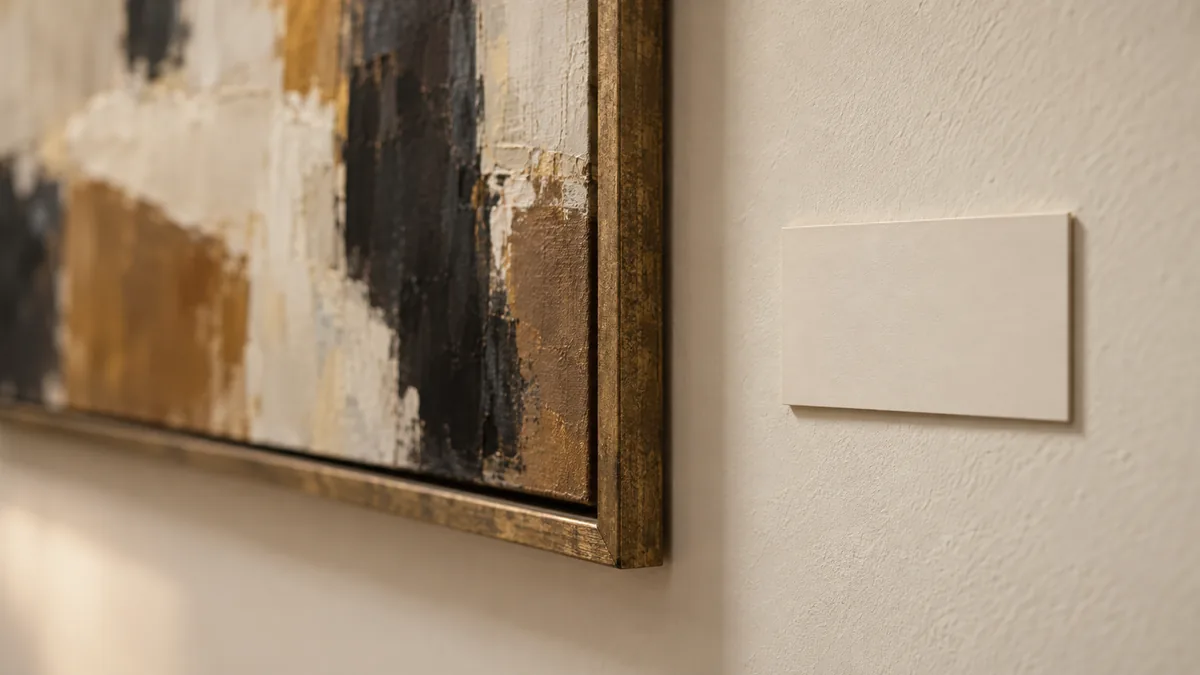
Let us start with frames. Frames are not neutral. They can define an edge of a painting to contain and direct focus to the interior elements of that painting. Or, they can fade away almost completely allowing the edges of the painting to flow outward into adjacent walls. Whether a frame defines an edge of a painting or allows the edges to flow outward into the walls is determined solely by the nature of the artistic elements contained within that painting. For example, a piece of art that relies heavily upon solid structural components and contains defined interior structures generally will benefit from having a frame that mirrors that structure and reinforces it rather than competes against it. Conversely, a piece of art created using loose, atmospheric techniques and with edges that blur into surrounding tones is generally best suited to a minimalist frame or no frame at all, so as not to contradict the softness of the painting itself. Mismanaging a framing decision represents a subtle failure. Although the painting itself remains untouched, its emotional impact is diminished.
Similarly, lighting impacts a painting as significantly as framing. However, like framing, lighting decisions are rarely permanent. A painting viewed under controlled gallery lighting appears differently than it would appear when illuminated under varying degrees of daylight within a home environment. Additionally, artificial light in the evening provides a warmer hue than bright overhead lighting used in galleries. We have watched numerous collectors develop a strong affinity for a canvas under gallery conditions only to find it exhibits characteristics dramatically different once installed in their homes. On occasion, adjustments need to be made in positioning to recapture aspects of the painting that initially attracted the collector.
For these reasons, we continually encourage collectors to factor into their purchasing decisions both the painting itself and, whenever feasible, the specific wall that will house the artwork. Collectors should also consider variables such as exposure to natural light; proximity to ceiling fixtures; etc. prior to making their final decision regarding the purchase.
Another variable impacting how a painting is perceived is how pieces are sequenced within an exhibit. Although seldom discussed beyond curatorial circles, this variable is acutely felt by anyone who has had experience walking through either a well-hung exhibit or a poorly hung one. As previously stated, how paintings are sequenced directly impacts interpretation. When viewers are shown a quiet and contemplative piece immediately after experiencing a densely dramatic one, they tend to interpret this pairing as an exhale, or as a deliberate change in pace that they feel regardless of whether they could explain why. Were this same contemplative piece placed next to another quiet piece, however, it may lose some or all of its unique energy due to blending into a more uniform atmosphere.
Curating an exhibit, or even creating a single wall within a collector’s home, involves precisely this kind of sequencing, knowing how each piece speaks to its neighbors and placing each piece accordingly to allow it to be heard clearly rather than muffled by its neighbor(s).
In addition to the aforementioned variables influencing perception of an artwork, there is also the story accompanying a piece into the world. Surprisingly, this aspect often receives less consideration than expected by many collectors. Understanding an artist’s creative process; influences; and/or series an individual piece belongs to creates additional dimensions for interpreting a piece of art. Again, this is not intended to imply that an adequate piece of art cannot stand on its own visually; strong works can support themselves visually. Rather, contextualizing an artist’s body of work provides additional depth to the visual experience.
Collectors often ask questions about an artist’s inspiration behind a specific piece; how certain themes were developed over time; and/or how the series evolved over time. These types of inquiries provide context and thus create new ways to appreciate and understand an individual piece of art. Learning that an artwork belongs to a larger body of work focused on a singular theme can lead to noticing nuances and variations within an individual piece of art that may have gone unnoticed had one not appreciated how that piece fit into the larger series.
Finally, we recognize that once a piece is moved from a public/commercial setting to a private collector’s home, its overall meaning evolves significantly. A painting exhibited publicly (e.g., in a gallery) is seen by many people for short periods of time in passing as part of an intentional exhibition narrative. In contrast, a painting exhibited privately (in someone’s home) is viewed by fewer people but on repeated occasions throughout daily routines and activities. This difference changes what expectations exist for each type of viewing situation. Therefore, when selecting which pieces of art are worthy enough to bring home and integrate into daily routines vs. being limited to occasional exhibitions/public viewing events requires considerable deliberation. Not every powerful piece of art is constructed with longevity in mind. Some artworks are designed for brief moments of intense connection or impact, whereas others are better suited for continuous observation/affection over extended periods, including everyday moments/activities.
Collecting Art Rewards Patience Over Impulse
Ultimately, we believe that collecting rewards patient consideration over impulsive purchases. Sometimes buyers fall head-over-heels for a piece of art based on a single compelling image/moment. Once installed in their homes however, such pieces can struggle to sustain the level of engagement/attention required from daily interactions/experiences. Conversely, buyers who carefully weigh multiple options and spend more time evaluating various works, returning frequently to examine each option repeatedly, are more likely to select pieces that will endure over time, including continuing to deliver value as quiet reflections occur.
Finally, although not commonly referenced in discussions about collecting/purchasing art, there exists an important practical component related to the physical handling and movement of artworks from location-to-location that impacts their eventual condition and, potentially, their interpretation. With each transfer or reinstallation, especially when unframed, reframed, or rehung, an artwork is subject to minuscule risks that can build up over time, such as changes in humidity, stretching or flexing of canvases during transportation, and the gradual settling of consolidation of paint layers. Careful stewardship includes minimizing non-essential movements, selecting packing and transport materials with similar gravity as selecting display materials, and recognizing that an artwork’s physical condition is integral to its interpretive meaning. An artwork subjected to careless handling conveys evidence or history of said abuse in its surface layer, regardless of how imperceptible, and careful curation and management includes protecting artworks from unnecessary journeys.